
Choosing the Right Materials Matters
Not all socks are created equal. Breathable materials like cotton, bamboo, or merino wool help regulate temperature without trapping moisture. They keep feet warm while allowing airflow, reducing the risk of irritation or sweat buildup.
For people with sensitive skin, seamless socks or styles designed specifically for comfort can prevent rubbing and pressure points. The goal isn’t heavy insulation—it’s steady, comfortable warmth that supports circulation without feeling bulky or restrictive.
Better Sleep Starts at the Feet
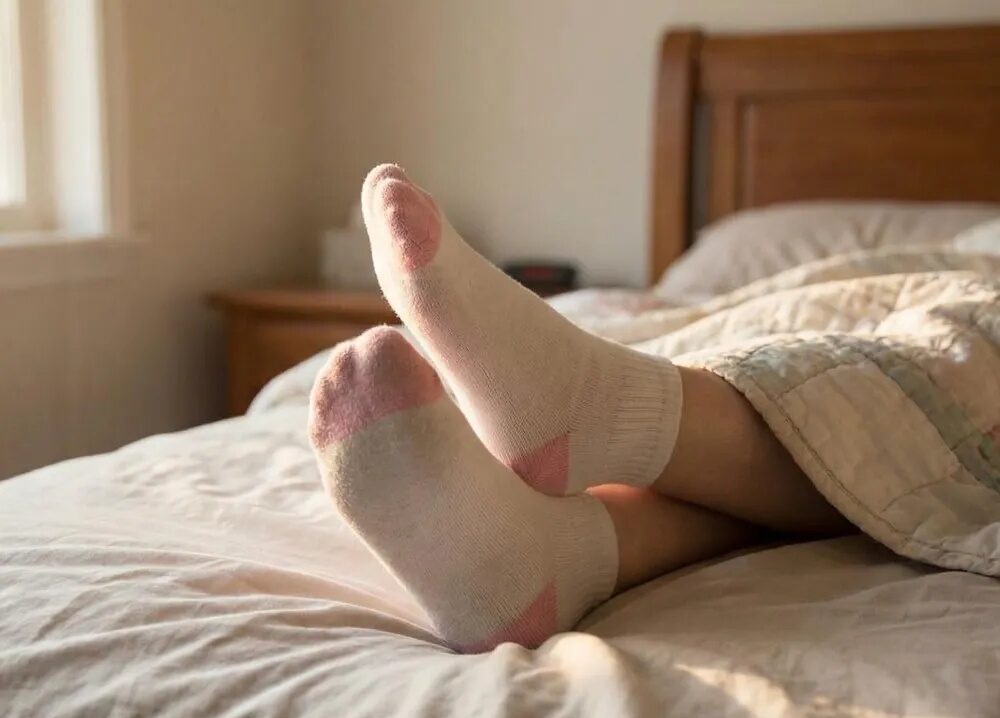
Temperature plays a key role in how the body prepares for sleep. Warm feet send calming signals to the nervous system, helping the body transition into rest mode. For older adults who struggle with falling asleep or staying asleep, wearing lightweight socks at night can help stabilize body temperature and reduce nighttime discomfort.
It’s a simple habit that doesn’t involve medication, routines, or devices—just a quiet nudge toward better rest.
Protection for Fragile Skin
As skin thins with age, feet become more vulnerable to dryness, cracking, and irritation—especially around the heels. Walking barefoot on hard or dry surfaces can worsen these issues. Socks provide protection by reducing friction and helping the skin retain moisture, particularly when paired with basic foot care.
They also shield feet from small abrasions, dust, and bacteria that naturally collect on floors, reducing the risk of minor injuries that can take longer to heal later in life.
A Safety Boost at Home
Falls are a major concern for older adults, and many happen indoors. Bare feet or smooth socks on slick surfaces can increase the risk of slipping. Non-slip socks, designed with grip patterns on the soles, provide traction without the bulk or rigidity of shoes.
For those who prefer not to wear shoes inside, grippy socks offer a practical middle ground—comfort without sacrificing stability.
Cleaner Feet, Healthier Habits
Wearing socks indoors also supports hygiene. Floors can harbor dust, allergens, and bacteria, even in the cleanest homes. Socks reduce direct contact and help keep feet cleaner throughout the day.
Changing socks regularly keeps feet dry and fresh, lowering the risk of irritation or fungal issues. Proper fit matters too—socks should feel snug but not tight, allowing circulation while staying comfortably in place.
Encouraging Daily Movement
When feet feel warm and protected, people tend to move more confidently around their homes. Reduced discomfort can encourage light activity—walking between rooms, standing while cooking, or doing small household tasks.
These everyday movements help maintain strength, balance, and independence over time. Comfort supports movement, and movement supports long-term health.
A Habit That Adapts to You
Wearing socks indoors doesn’t mean sacrificing comfort or personal preference. Some people prefer thin socks during the day and warmer ones at night. Others only wear them during colder seasons. The key is awareness—recognizing that feet need more care as the body changes and responding with simple, supportive choices.
Small Change, Real Benefits
Foot discomfort can ripple outward, affecting posture, balance, energy levels, and even mood. Keeping feet warm, protected, and comfortable helps support the foundation of daily life. Socks may seem like a small detail, but they quietly reduce friction—both literal and physical—making everyday routines easier.
Wearing socks indoors isn’t about limitation. It’s about gentle adaptation. As we age, the most effective improvements often come from small, thoughtful habits rather than major lifestyle overhauls.
A well-chosen pair of socks can support circulation, protect sensitive skin, improve rest, and reduce fall risk—all with minimal effort. Sometimes, the simplest changes are the ones that make daily life feel just a little bit better.