
The months that followed taught me a new language—one built entirely on restraint. I never demanded answers or filled the air with questions meant to soothe my own nerves. I refused to turn words into weapons. We lived side by side in a quiet partnership. Every night, I read aloud to him, letting the rhythm of my voice build a bridge he could cross when ready. I packed his lunches with handwritten notes—I’m glad you’re here. I’m proud of you. For weeks, they returned untouched or forgotten. Then one morning, I found one folded neatly on the kitchen counter. He wasn’t just hearing me. He was listening.
Little by little, the fortress softened. I would cook and tell stories about my own childhood mishaps, and sometimes I’d catch the faintest tremor in his shoulders—a suppressed laugh that felt like a triumph. He began waiting by the door when I searched for my keys. He noticed when I was tired. When a winter flu left me bedridden, I woke to find a glass of water beside me and a scrap of paper that read, For when you wake up. It was the first sign that he was watching over me with the same quiet vigilance I gave him.
Time passed, and the silence changed shape. It was no longer a wall—it became a blanket. Jonah grew taller, his movements less guarded, his presence more certain. Others were less patient. People asked if he was “fixed” yet, or if I felt cheated by his lack of speech. I always smiled. Jonah didn’t need to speak to be heard; he needed consistency. And he stayed—through the awkwardness of middle school, through the turbulence of early adolescence, learning how to exist in a loud world without losing himself.
When Jonah turned fourteen, I decided to make our bond official. I didn’t ask for promises. I placed the adoption papers in front of him and told him all he had to do was nod. He studied them carefully, then gave a slow, deliberate inclination of his head.
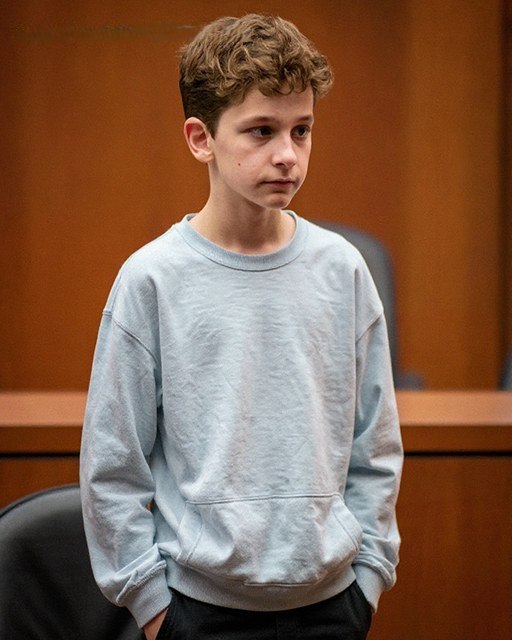
The morning of the hearing, tension clung to the air. Jonah barely ate, folding a napkin into smaller and smaller squares. I told him this wasn’t a test—it was a celebration. He squeezed my hand as we entered the courthouse.
Judge Holloway spoke gently, telling Jonah he didn’t have to speak. He could nod. He could write. Then he asked the question.
The silence stretched unbearably.
Then Jonah cleared his throat. The sound was rough, unused.
“I want to say something,” he whispered.
He spoke of being seven and left behind at a grocery store. Of foster homes where silence was mistaken for defiance. Of learning that making no sound felt safer than risking rejection.
“When Mira took me in,” he said, voice trembling but growing steadier, “I thought she’d change her mind too. So I stayed quiet. I thought if I didn’t make a sound, I wouldn’t mess it up. But she stayed. She didn’t make me talk. She just loved me. She was already my mom. She just didn’t know I knew.”
He looked at the judge.
“Yes. I want her to adopt me.”
The decree was signed through tears. Outside, the air felt lighter, as though the world had finally aligned with the truth we had lived for years. Jonah handed me a tissue.
“You’re welcome, Mom,” he said.
That night, he picked up the book at bedtime. His voice filled the corners of the house where echoes once lived. And I understood then: our silence had never been empty. It was the soil where trust had grown—patiently, quietly—until it finally found its voice.