
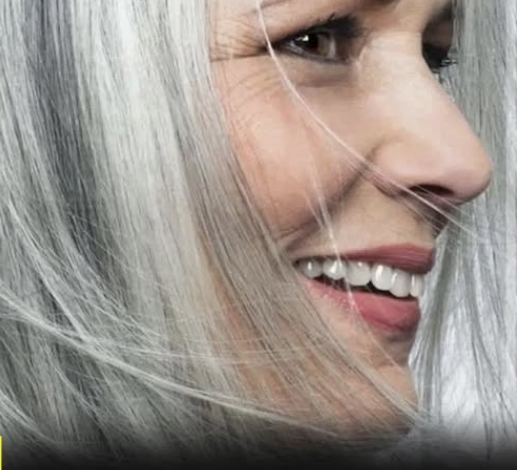
Men face their own pressures, especially in competitive workplaces where aging can feel like a liability. For them, going natural can signal confidence and a refusal to measure worth by constant performance. In both cases, the psychology is similar: internal validation begins to outweigh external judgment.
There’s also a shift in how time is perceived. Dyeing hair can feel like battling aging itself. Letting gray grow often reflects a new relationship with time—not as an enemy, but as something integrated into identity. It’s not about glorifying aging; it’s about no longer defining oneself against it.
Many people report a surprising sense of relief after making the change. Beyond the practical freedom from constant upkeep, there’s emotional ease. Less self-monitoring. Less fear of being “found out.” Psychologically, this reduces background stress and frees mental energy for what actually matters.
Social reactions vary. Some people receive more respect. Others encounter dismissiveness. How deeply those reactions land often depends on where someone is in their own acceptance process. When the decision is truly internalized, outside opinions lose their grip.
In this way, gray hair becomes a boundary. It filters expectations and clarifies whose approval still holds power. For many, it marks a broader life stage focused on alignment rather than validation.
It’s important to note that choosing to dye hair isn’t inherently negative. Authenticity isn’t defined by one look. For some, coloring hair is playful, creative, or cultural. The psychological difference lies in why the choice is made—fear versus freedom.
What makes going gray meaningful isn’t the color itself, but the confrontation with internalized beliefs about aging, attractiveness, and worth. Many people discover assumptions they didn’t realize they were carrying—and letting go of them builds resilience and self-compassion.
Over time, what once felt bold becomes neutral. Gray hair simply becomes hair. That shift signals integration—the self no longer divided between a public mask and a private reality.
Culturally, the growing visibility of natural gray hair reflects a wider change. As rigid beauty standards loosen, everyone benefits. The pressure eases not just for those who go gray, but for anyone navigating how they want to age.
Ultimately, letting gray hair grow is less about appearance and more about relationship—to self, to time, and to expectations. For many, it marks the moment they stop negotiating their existence and start inhabiting it fully.
Gray hair isn’t an ending. It’s continuity. Evidence of a life lived, adapted, and carried forward—without apology.
What do you think about the shift toward embracing gray hair? Share your thoughts below and join the conversation.