
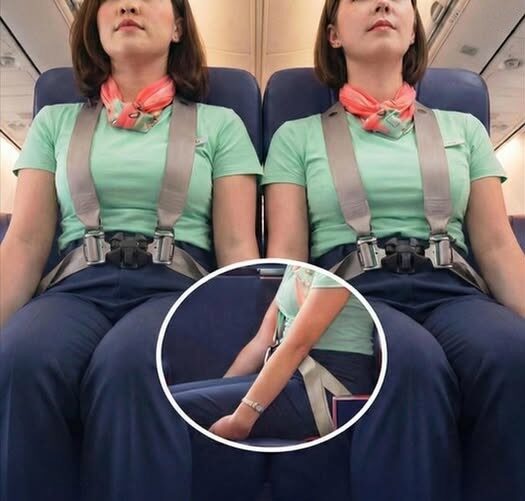
The main reason is injury prevention.
In the unlikely event of sudden turbulence or a hard landing, loose arms can flail and cause injury. By placing their hands under their thighs, crew members secure their arms and reduce the risk of impact-related harm.
It also helps maintain body stability. Keeping limbs close to the body lowers the chance of strain and allows them to remain physically capable of responding immediately if needed.
In aviation, even small precautions matter.
Alert, Not Relaxed
This posture isn’t just physical — it’s mental.
During takeoff and landing, flight attendants are highly alert. They scan the cabin, observe passengers, and stay attentive to instructions from the flight deck. The upright position reinforces focus and discourages complacency.
Passengers are typically instructed to lean forward in a brace position if necessary. That’s because their priority is self-protection. Crew members, however, must be ready to stand quickly and assist others. Their position allows for rapid movement and balance.
Training Behind Every Detail
Aviation safety depends on preparation and consistency. Flight attendants undergo extensive training to ensure they can act quickly and efficiently under pressure. The hands-under-thighs technique is one of many standardized procedures designed to protect both crew and passengers.
Even on smooth flights, these safety steps are always followed. That consistency builds reliability.
A Small Detail With Big Purpose
The next time you notice a flight attendant sitting upright with their hands beneath their thighs, you’ll know it’s not random — it’s readiness.
It’s a quiet reminder that behind every calm cabin experience is a system built on discipline, preparation, and safety-first thinking.
Have you ever noticed this during a flight? Share this with someone who loves travel facts — they’ll never look at takeoff the same way again.