
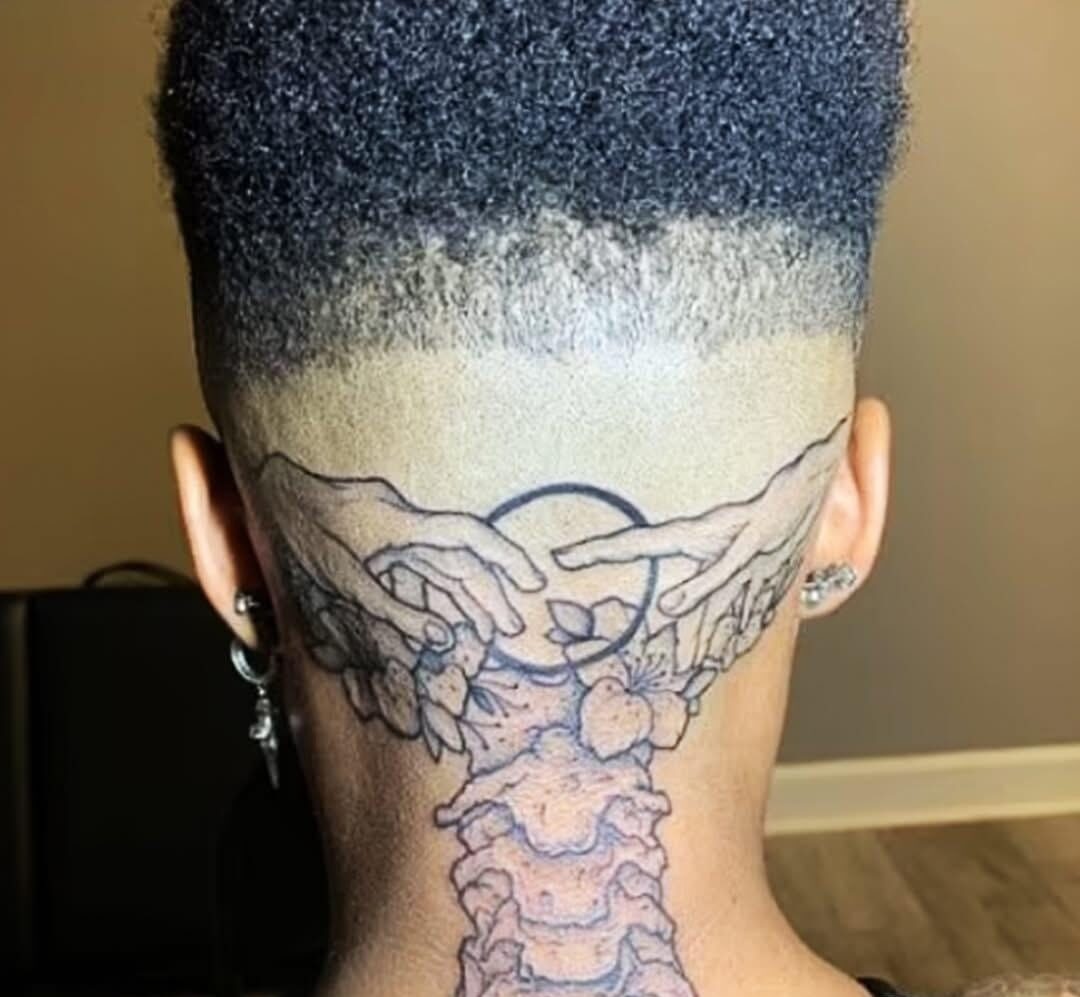
Then, on November 10, 2023, a captain photographed Adams while the tattoo was covered. Hours later, she was terminated. There was no warning, no gradual escalation—just sudden job loss. Department leadership later cited “failure to meet standards,” but Adams sees it differently. Compliance was never the issue.
For Adams, the tattoo was far more than decoration. Living with scoliosis, a spinal condition causing chronic pain, she fought to become a firefighter. The tattoo symbolized resilience—a reminder that challenges wouldn’t dictate her ambitions. It was identity, not rebellion, inked into her story of perseverance.
Her termination also intersected with her workplace advocacy. Adams had raised concerns about sexist remarks and inappropriate training behavior, including jokes involving nooses. Speaking up put her at odds with colleagues and supervisors. Two supportive captains, Jason Craig and Rodrick Shoots, were later disciplined—one suspended, one fired—officially for unrelated policy violations. The timing fueled public skepticism: was policy being enforced, or dissent being punished?
Adams’ case has ignited a broader discussion about workplace conformity, identity, and fairness. Fire departments emphasize discipline, hierarchy, and uniformity, but critics argue that such standards lag behind modern social realities, disproportionately affecting women and people of color. Retroactive or selective enforcement leaves employees vulnerable, especially when appearance—not performance—is judged subjectively.
What’s clear: Adams wanted to do the job. She trained hard. She followed instructions. She didn’t seek attention—but attention found her anyway.
Since her firing, Adams has become a symbol for conversations about employee rights, inclusion, and institutional accountability. Her story isn’t just about a tattoo—it’s about who defines professionalism and whose bodies are policed.
At its core, her experience forces an uncomfortable question: when policies collide with identity, and speaking up carries consequences, is “professionalism” truly neutral—or just a tool for control?
Kay’Ana Adams didn’t lose her job because she failed to serve. She lost it at the intersection of expression, power, and an institution unwilling to adapt. Whether her story sparks change remains uncertain, but it already underscores a crucial truth: enforcing rules without context can cost far more than a single career—it can cost dignity.