
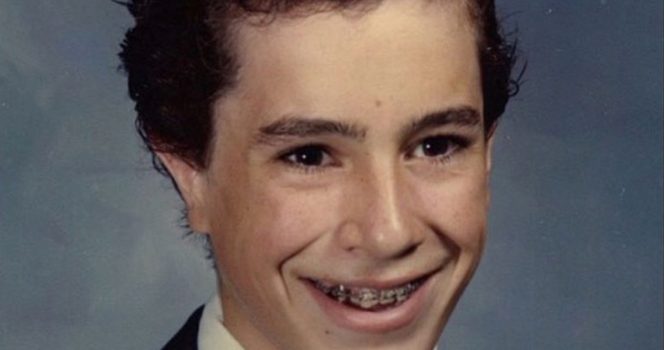
He has described the years that followed as emotionally suspended. Normal childhood concerns faded. Plans felt pointless. The world no longer seemed predictable enough to trust. Rather than process the grief openly, he learned how to function around it, growing inwardly reserved while carrying responsibilities far beyond his age.

Drew Carey and Stephen Colbert during The 10th Annual U.S. Comedy Arts Festival – Who’s Funnier – The Left or The Right at St. Regis Hotel Ballroom in Aspen, Colorado, United States. ***Exclusive*** (Photo by Jeff Kravitz/FilmMagic, Inc)
Imagination became a lifeline. Fantasy and science fiction—especially the works of J.R.R. Tolkien—offered stories where suffering had structure and endurance had meaning. His faith also deepened, not as an escape, but as a framework for wrestling with grief rather than avoiding it.
Colbert’s early college years were unsettled. He attended Hampden-Sydney College but felt disconnected and unsure of direction. It wasn’t until he encountered theater and improvisation that clarity began to emerge. Performance offered something grief had taken away: agency. Onstage, chaos could be shaped, silence could be broken intentionally, and emotion could be transformed rather than suppressed.
That realization led him to transfer to Northwestern University to study performance. Ironically, it was there—away from home and routine—that the full weight of his grief surfaced. He later acknowledged struggling emotionally, losing weight, and feeling isolated. For the first time, he was alone with thoughts he had spent years avoiding.
At that stage, Colbert believed drama—not comedy—was his future. Comedy felt too light for the seriousness he carried. That belief didn’t last.

LOS ANGELES, CA – AUGUST 25: Stephen Colbert, Evelyn McGee-Colbert and son attend the 66th Annual Primetime Emmy Awards Governors Ball held at Los Angeles Convention Center on August 25, 2014 in Los Angeles, California. (Photo by Jeff Vespa/WireImage)
After graduating, he joined Second City’s touring company, where he worked alongside future collaborators including Steve Carell, Amy Sedaris, and Paul Dinello. Improvisation didn’t erase his gravity; it sharpened it. Humor became a tool for precision rather than deflection.
His national breakthrough came on The Daily Show, where his focused intensity and intellectual satire set him apart. That success led to The Colbert Report, where he portrayed an exaggerated political commentator with such accuracy that some viewers mistook satire for sincerity. The character was rooted in deep observation and rhetorical discipline.
Later, Colbert stepped into one of television’s most scrutinized roles, succeeding David Letterman as host of The Late Show. The transition marked a shift away from character work toward something more personal. His version of late night leaned into politics, ethics, and current events without abandoning humor—and audiences responded. Ratings surged, and Colbert became the most-watched late-night host for multiple seasons.
Financial success followed, but his personal life remained notably grounded. Married since 1993, he is a devoted husband and father who keeps family life largely private. He has also been open about health challenges, continuing to work through serious medical issues with honesty and restraint.
Loss returned again with the death of his mother in 2013. In a rare moment of vulnerability on air, Colbert reflected not on closure, but on gratitude—on resilience, faith, and love that endured even after unimaginable loss.
In 2025, CBS announced that The Late Show would conclude in 2026, ending a 33-year franchise. Despite strong ratings, the decision was framed as strategic rather than performance-based. Colbert responded with professionalism and gratitude, acknowledging the privilege of the platform and the people behind it.
Though his nightly presence will end, his influence continues—through producing, mentoring, and shaping the next generation of voices in comedy and commentary.
Stephen Colbert’s career is often described as brilliant. That’s true—but incomplete. It is also disciplined, deliberate, and shaped by early loss. Before there was laughter, there was silence. Before success, there was survival. And through it all, a quiet decision repeated daily: to turn grief into meaning, and meaning into something that could speak back to the world.