
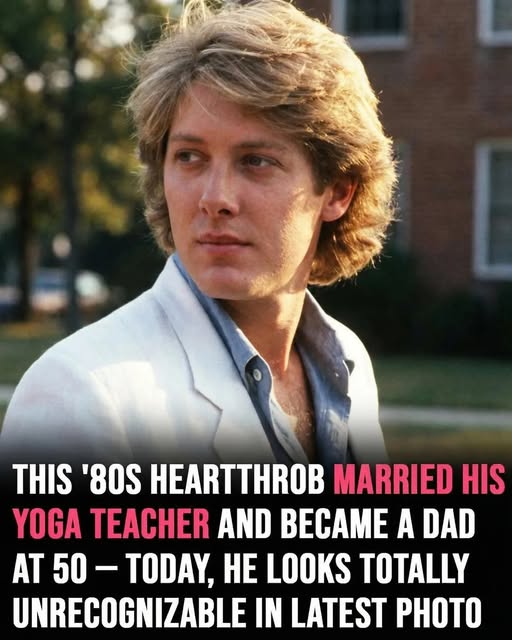
His breakout came in the form of Steff, the icy, impeccably dressed antagonist in Pretty in Pink. It was the kind of role that could’ve typecast him forever, but he played it with such cool detachment and layered cruelty that audiences remembered him even more than the film’s leads. From there, he chose projects that pushed him rather than ones that guaranteed attention. His biggest turning point came with Sex, Lies, and Videotape. That film didn’t just make him famous—it earned him the Best Actor award at Cannes and proved he wasn’t another young face carried by ’80s nostalgia. He was an actor with weight.
The ’90s and early 2000s brought the roles that would cement his reputation as one of the most quietly brilliant performers of his era. But it was his portrayal of lawyer Alan Shore—first in The Practice, then in Boston Legal—that left the deepest mark. Spader played Shore as both charming and abrasive, principled and morally questionable, devastatingly intelligent and deeply flawed. It was a character nobody expected the public to embrace. Instead, viewers loved him for exactly those contradictions. Spader won three Emmys for the role, all while keeping his distance from the celebrity circus forming around him.
Privacy, for Spader, is not a preference—it’s a boundary. He’s spoken openly about his need for structure, routine, and separation between work and personal life. He famously avoids technology, owning no working computer and carrying an outdated flip phone that he admits barely functions. He has mentioned battling obsessive-compulsive tendencies since childhood, a reality that shapes how he organizes his days, chooses his roles, and protects his mental space. None of it has held him back; if anything, it’s sharpened his craft.
His marriage to Victoria ended in 2004, but in the years that followed, Spader built a new life with actress and sculptor Leslie Stefanson. They welcomed a son in 2008, and Spader embraced fatherhood again with the kind of quiet devotion he never broadcasts publicly. He’s described raising a child later in life as something that slowed him down in the best way, forcing him to rethink the pace of work and the price of attention. During the pandemic, he stayed out of sight, finding rhythm in the simplest daily rituals with his youngest son.
Fans rarely see him beyond his roles. The last widely circulated images of him before 2025 were taken on the set of The Blacklist, where he played Raymond Reddington with that unmistakable combination of menace and charm. Then, without warning, he appeared at actress Tara Summers’ wedding in Morocco in early 2025. The photos leaked online showed a Spader so transformed—older, softer, more weathered—that the internet buzzed for days. Some were shocked. Others simply nodded and said he looked like a man who’d lived on his own terms.
And that’s the throughline of James Spader’s entire life. While other actors chase relevance, he chases roles that mean something. While others thrive on public exposure, he slips into obscurity between projects, savoring the anonymity he fought to maintain. He works because he loves the work. He disappears because he loves his life more than the attention that comes with it. The result is a career defined by consistency, depth, and an unusual kind of longevity. He has never reinvented himself to fit Hollywood’s changing tastes. Instead, he has stayed exactly who he is: meticulous, private, quietly intense, and unwilling to perform off-screen in a world that demands constant visibility.
James Spader may no longer be the ’80s heartthrob who made audiences swoon with a single smirk, but he’s become something more impressive—a man whose artistry speaks louder than his presence, whose mystery deepens his appeal, and whose refusal to bend to fame’s expectations has carved out a legacy as singular as any character he’s ever played.