
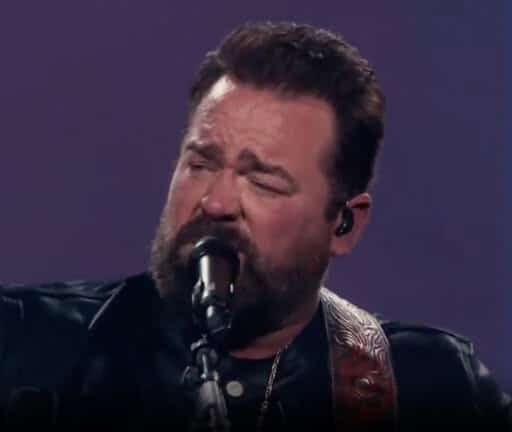
Lee Brice, a GRAMMY-nominated artist with songs like “I Don’t Dance,” “Rumor,” and “One of Them Girls,” generated the most discussion for his onstage remarks. Before performing, Brice addressed the crowd, referencing Charlie Kirk’s legacy: “He gave people microphones so they could say what’s on their minds. This is what’s on my mind.” He then launched into his song “It Ain’t Easy Being Country In This Country Nowadays,” framing it as a personal statement rather than simply another musical selection.
The lyrics conveyed feelings of cultural and political frustration, expressing a sense of alienation shared by some Americans who identify strongly with rural or traditional values. Brice referenced faith, moral conviction, and small-town experiences, emphasizing how some individuals feel overlooked or marginalized in contemporary discourse. The performance quickly circulated online, sparking divided reactions: supporters praised Brice for articulating shared experiences and values, while critics decried the political undertones of the song and the broader event.
Within the context of the Super Bowl, the All-American Halftime Show functioned less as a competitor in scale and more as an alternative in meaning. It did not attempt to rival the production value or global reach of the NFL’s official show but instead provided a space for artists and audiences who felt underrepresented. The overt commentary, especially in Brice’s performance, reinforced the event’s purpose: to present a cultural viewpoint alongside mainstream entertainment.
The event also highlighted the growing intersection of music, politics, and identity in high-profile moments. Halftime shows have long been culturally symbolic, but TPUSA’s parallel production made the dynamic explicit: it offered not just entertainment but a platform for expression aligned with specific ideological values. For some, this represented an innovative way to engage audiences outside traditional political channels; for others, it underscored the deep polarization of contemporary cultural discourse.
By the end of the evening, the All-American Halftime Show had succeeded in drawing attention—not only to its performers but to the ideas it sought to elevate. Brice’s remarks and song became defining moments, encapsulating the tone TPUSA aimed to strike. Whether seen as an expression of free speech or a polarizing statement, the event ensured that this alternative halftime show would remain part of the conversation long after the final whistle.
In an era where entertainment and ideology increasingly overlap, the event underscored a broader trend: music is rarely just background noise. It remains a vehicle for identity, belief, and personal truth, capable of shaping conversation and cultural perception long after the last note fades.