
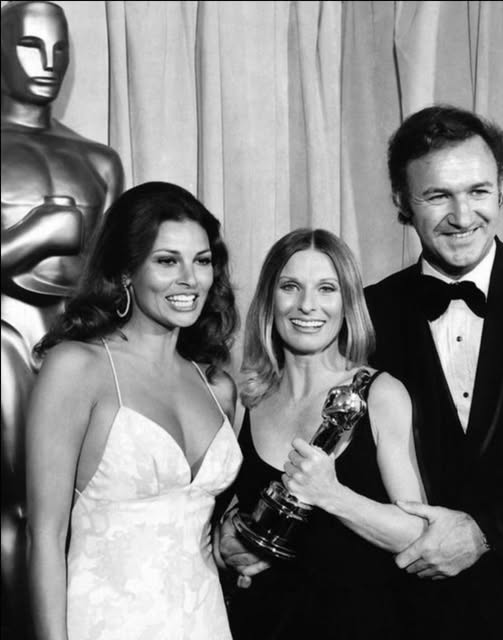
Inside, culture collided with art. Isaac Hayes won Best Original Song for Theme from Shaft, a Blaxploitation anthem claiming space at the Oscars. It was more than a personal victory—it signaled a slow, tentative recognition that voices long sidelined were reshaping mainstream culture.
The most unforgettable moment, however, arrived quietly. Charlie Chaplin, long exiled during the Red Scare, walked onto the stage to receive an honorary Oscar. Frail, aged, and slow, he nonetheless received one of the longest standing ovations in Oscar history. The audience wasn’t just honoring a man—they were bridging eras, connecting the silent-film roots of Hollywood to its uncertain present. Past and future breathed together in that applause.
The photograph captures this contradiction perfectly: elegance and exhaustion, pride and uncertainty. Hollywood was shedding its old skin, responding to forces it could no longer fully control—youth culture, political unrest, and a hunger for authenticity. Nothing in the image shouts revolution; its power lies in what followed. The 1970s would bring auteur-driven films, morally complex stories, and studios daring to take risks.
From today’s perspective, shaped by streaming platforms and algorithm-driven content, the 1972 Oscars feel intimate. The industry was smaller, less corporatized, and directly connected to cultural shifts around it. No viral moments, no curated headlines—just unfiltered history captured in a single frame.
That unedited photograph proves transformation doesn’t always announce itself loudly. It hides behind rituals, waiting for history to reveal its meaning. Hollywood in 1972 wasn’t just giving out awards—it was confronting its past while stepping, sometimes reluctantly, into a more complex future. Polished on the surface, restless underneath, and standing at the edge of change it could no longer delay.
What’s your favorite Hollywood moment that marked a cultural shift? Share your thoughts and join the conversation about cinema’s most transformative nights.