
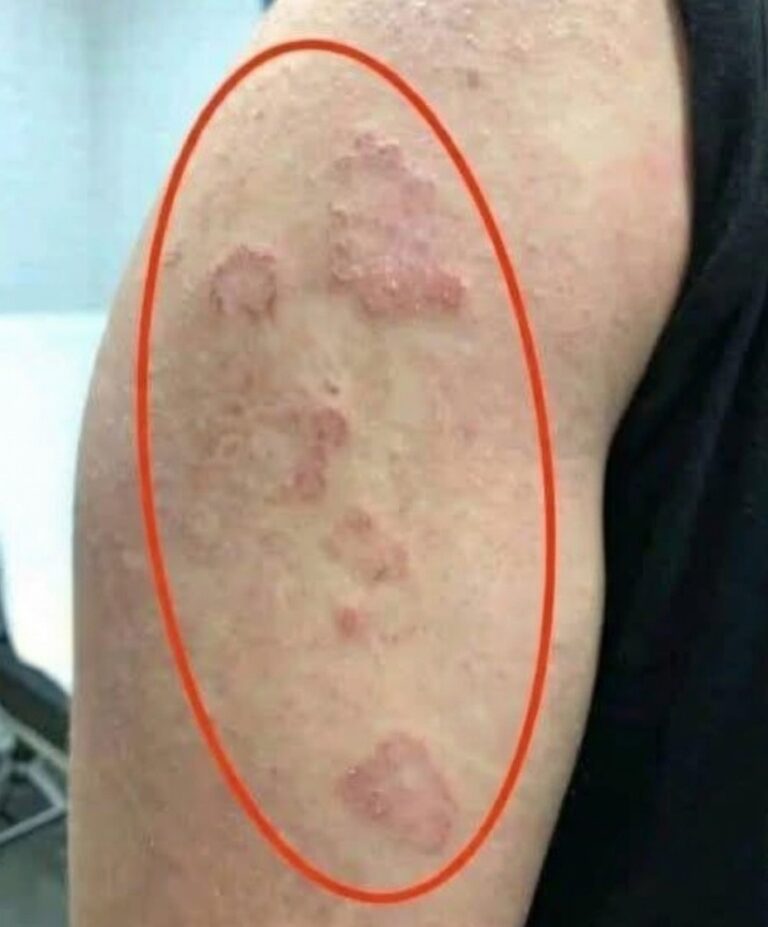
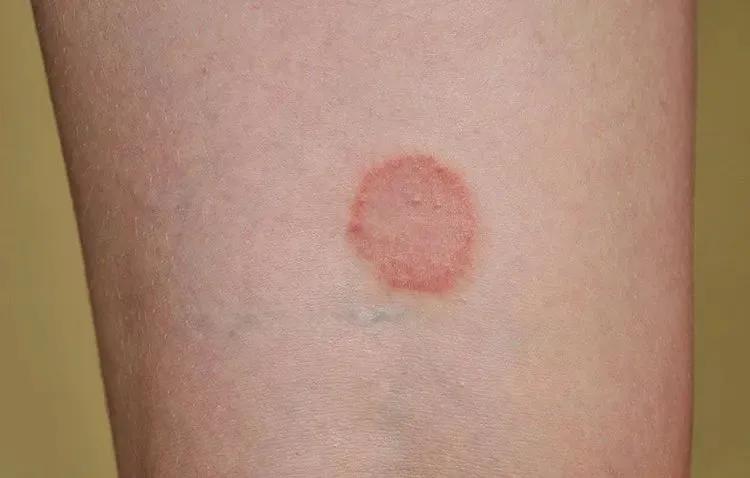
Not every circular rash is an infection. Two common non-contagious conditions often mistaken for ringworm include:
Nummular eczema (coin-shaped eczema):
This causes red, itchy, round patches, often on arms or legs. It’s linked to skin barrier issues and inflammation—not germs—so it doesn’t spread to others.
Psoriasis:
Psoriasis creates red patches with thicker, silvery scales. It’s an immune-related condition and is not contagious, even with close contact.
How to Spot the Difference
Looks can help, but they’re not foolproof. Some clues:
- Fungal rashes often have a defined outer ring and expand outward
- Eczema patches tend to be dry and may ooze or crust
- Psoriasis plaques are thicker and commonly appear on elbows, knees, or the scalp
One extra tip: if a rash gets worse after using steroid creams, that can point toward a fungal cause, since steroids may allow fungi to spread.
When to Get It Checked
See a medical professional if:
- The rash keeps spreading
- It becomes painful or intensely itchy
- Over-the-counter treatments don’t help
- You’re unsure what you’re dealing with
A simple skin test can confirm whether it’s fungal or inflammatory.
If It’s Fungal: Stop the Spread
- Keep the area clean and dry
- Don’t scratch
- Avoid sharing towels or clothing
- Wash bedding regularly
- Treat pets if a vet confirms infection
With proper antifungal treatment, most fungal rashes clear within a few weeks.