
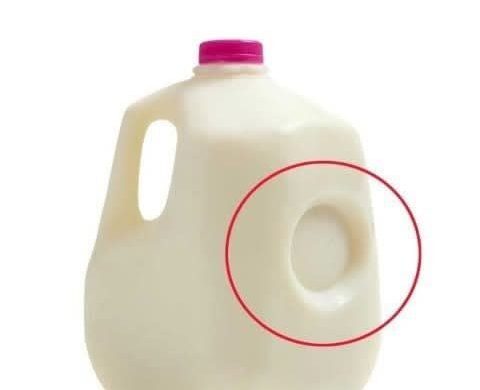
The Hidden Purpose of the Small Dent on Milk Jugs
Have you ever noticed the small circular dent on the side of a plastic milk jug? 🥛
It’s one of those tiny details most people overlook—until curiosity strikes. At first glance, it might look like a manufacturing mistake or just a decorative design choice. But that little indentation is actually a clever piece of engineering.
In reality, the dent plays several important roles in keeping your milk container safe, durable, and efficient.
Let’s take a closer look at why it’s there.
- It Helps Control Pressure
Milk is a liquid that reacts to temperature changes. When the temperature shifts—such as moving from a delivery truck into a refrigerator—the liquid inside the jug can expand or contract.
The circular indentation acts like a built-in pressure regulator. If the milk expands slightly, the dent can push outward to relieve the stress inside the container.
Without this flexible area, the plastic jug could swell, crack, or even burst—especially if the milk freezes. The dent essentially gives the container room to adjust safely.
- It Helps Prevent Spills and Damage
Accidents happen. Milk jugs are dropped, bumped, and stacked during shipping and while being stocked in stores.
The indentation works like a shock absorber. When the jug experiences impact, that flexible section helps absorb some of the force. This reduces the chance of cracks or leaks forming in the plastic.
For manufacturers and stores, this simple design feature helps prevent product loss—and for consumers, it means fewer messy kitchen spills.
- It Strengthens the Jug Without Using More Plastic
Another clever benefit is structural strength.
The shape of the dent reinforces the container, much like the curved arches used in architecture. The structure becomes stronger because of its shape, not because of extra material.
Continue reading on the next page…