
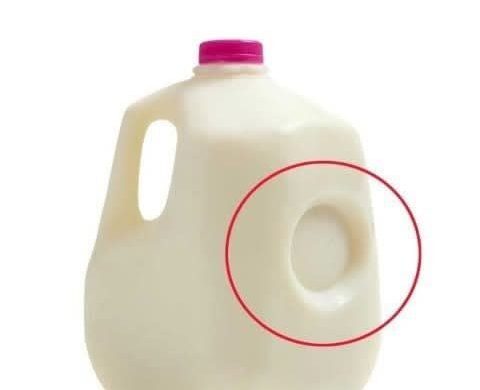
This means manufacturers can produce sturdy containers while using less plastic. The result is a lighter, more cost-efficient package that’s still strong enough to hold several pounds of liquid.
A Possible Warning Sign for Spoiled Milk
Interestingly, the dent can sometimes signal when milk has gone bad.
If bacteria grow inside the jug, they may produce gas as a by-product. That gas builds pressure inside the container, which can cause the dent to bulge outward.
If you notice a milk jug with an unusual outward bump or swelling, it could be a sign the milk has spoiled. While not every bulge means the milk is bad, it’s a good reminder to check before pouring.
Why the Dent Is a Circle
You might wonder why the indentation is usually circular instead of square or triangular.
Circles distribute pressure evenly. Because there are no sharp corners where stress can concentrate, the round shape allows the plastic to flex more smoothly when pressure changes occur.
It’s also easier for manufacturers to produce consistently, making the design both practical and efficient.
Other Smart Features on Milk Jugs
That little dent isn’t the only thoughtful detail on milk containers. Several other features serve useful purposes:
Handle opening: Reduces plastic usage while making the jug easier to hold
Bottom ridges: Help the jug stay stable on shelves and in refrigerators
Colored caps: Often indicate the type of milk, such as whole, 2%, or skim
These small design choices make everyday packaging more efficient than most people realize.
The next time you pick up a milk jug, take a second look at that tiny indentation. What seems like a simple detail is actually a smart solution created through thoughtful engineering.
Did you already know about the milk jug dent?
Share your thoughts in the comments—and tell us about another everyday object whose hidden purpose surprised you!