
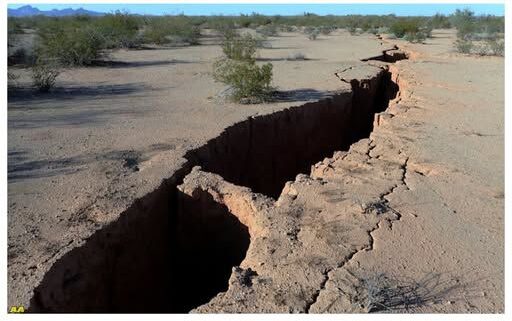
The human toll is significant. Families live with anxiety as the ground shifts beneath them. Property values drop. Selling becomes difficult. Residents describe the shock of watching the earth open without warning. For some, fissures are not just geological—they’re financial and emotional crises.
Experts warn: this isn’t slowing down. Satellite data shows continuous land sinking. Fissures are growing longer, denser, and closer to critical infrastructure. Arizona faces hard choices: enforce no-build zones, ramp up groundwater conservation, redesign cities, or risk expanding the cracks.
The message is clear: building on a shrinking aquifer is a bet against physics. Fissures don’t negotiate or pause for development pressures—they follow the path carved by decades of extraction.
Arizona has always demanded respect for its land and water. Modern engineering lets us push limits, but the fissures remind us some boundaries remain. These cracks are not sudden disasters—they’re the long-term consequences of ignoring limits.
The state can still adapt. Smarter water management, stricter building rules, and honest risk communication can stabilize the future. But it starts with acknowledging the reality: the ground is already breaking. The only question is whether planning and policy will bridge the gap—or let it widen until repair is impossible.