
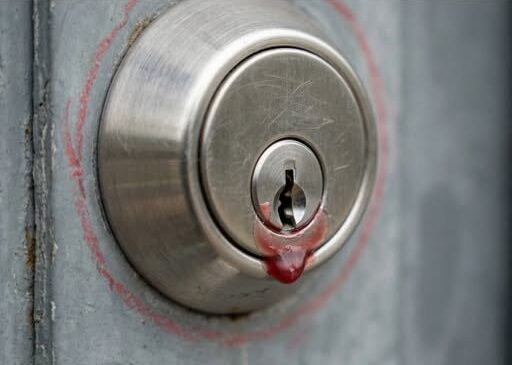
That said, not every instance of red wax is criminal. There are innocent explanations: nearby candles, construction materials, children, or residue from previous occupants. The issue isn’t the wax itself—it’s uncertainty. When you don’t know how it got there, it’s worth responding thoughtfully.
Start with inspection. Check the entire entryway, not just the lock. Look at door frames, hinges, windows, gates, and mailboxes. Are there scratches, smudges, chalk marks, or signs of tampering you didn’t notice before? Criminals often test multiple access points, and a single mark may be part of a larger pattern.
Document everything. Take clear photos before removing the wax. This gives you a reference point if something similar appears again or if you decide to report it. Then remove the wax completely and clean the area. If it comes back, that’s no longer coincidence.
Next, evaluate your lock. Older or basic locks are easier to manipulate. Upgrading to a quality deadbolt, reinforced strike plate, or modern smart lock adds resistance—and resistance is often enough. Criminals prefer speed and silence. Anything that adds time or noise makes your home less attractive.
Visible security matters. Cameras don’t just record crime; they prevent it. Even one clearly visible camera near an entry point can stop someone who’s testing a property. Motion-sensor lights work the same way. Darkness provides cover. Light removes it.
Talk to your neighbors. Ask if they’ve noticed anything unusual on their doors or gates. Criminal activity rarely targets a single home. Patterns emerge across a street or block, and shared awareness is one of the simplest forms of protection.
If something feels off—or if signs repeat—contact local law enforcement. Reporting doesn’t mean making accusations. It creates a record. Small reports help police identify trends, even when no single incident seems serious on its own.
Daily habits matter more than people think. Predictability is a vulnerability. Leaving at the same times, letting mail pile up, or keeping blinds open at night can signal when a house is empty. Small adjustments—light timers, varied routines, mail holds—add layers of protection with little effort.
Complacency is often the real risk. Many people assume serious crime happens somewhere else. That assumption is exactly what criminals count on. A strange mark isn’t proof—but it can be a warning.
Home security isn’t about fear. It’s about awareness. A red wax mark doesn’t mean your house will be robbed. It means something unusual happened, and unusual things deserve a calm, practical response.
Your home is where you feel safe enough to relax. Protecting it doesn’t require paranoia—just paying attention and acting when something doesn’t belong. The next time you unlock your door, take a second look. The smallest details are often the ones that matter first.