
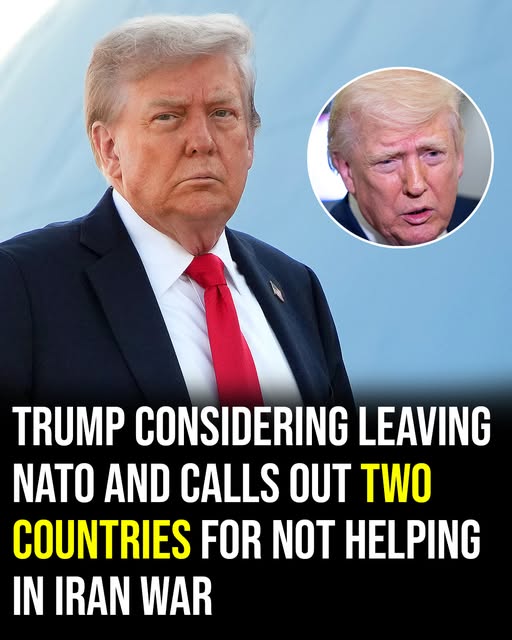
He has criticized NATO for years, but this round of comments went further, describing the alliance as a “paper tiger”—a phrase meant to imply that NATO looks strong on paper yet lacks decisive power when it matters most.
What NATO Is—and Why a U.S. Exit Would Be a Global Shock
Created in 1949, NATO was designed as a collective security agreement, built around the idea that an attack on one member would be treated as an attack on all. It began with 12 founding nations and has since expanded to 32 members, making it one of the most influential military alliances in modern history.
Because the United States has long served as NATO’s central pillar, any serious discussion of withdrawal instantly raises high-stakes questions about:
- European security and deterrence strategy
- Defense spending and military readiness across member states
- Global stability, including power balances beyond Europe
- Future U.S. foreign policy priorities and commitments
Even the possibility of an exit can reshape diplomatic calculations—because markets, militaries, and governments plan around risk, not just outcomes.
Trump’s Sharpest Criticism Targets the UK and France
In his latest comments, Trump singled out two of America’s closest historic partners: the United Kingdom and France. Both have deep ties to Washington through decades of intelligence cooperation, military operations, and diplomatic coordination. But Trump argued their recent positions have fallen short of what he expects from allies.
He criticized the UK for what he characterized as reluctance to support more aggressive action tied to Iran-related tensions. He also aimed at France, alleging it created obstacles to logistical support connected to military operations.
Whether or not those claims are fully verified, the political message is clear: Trump is measuring alliances by direct participation and tangible support, not tradition or symbolism.
A Transactional View of Alliances—and a Long-Running Defense Spending Fight
Trump’s approach to NATO has consistently centered on burden-sharing—especially defense budgets. He has repeatedly argued that some member states depend too heavily on U.S. military power while investing too little in their own capabilities.
That argument has been a recurring flashpoint in transatlantic relations. While several NATO countries have increased defense spending in recent years, the underlying tension never fully disappeared—and current global conflicts appear to be bringing it back to the surface.
Trump also reignited controversy by questioning British military capacity, including pointed remarks about naval strength and defense readiness—comments likely to inflame political debate on both sides of the Atlantic.
Not an Isolated Moment: A Pattern of Challenging Old Assumptions
This isn’t the first time Trump has disrupted established expectations in U.S.-Europe relations. Past disputes—such as the diplomatic fallout tied to his earlier interest in acquiring Greenland (a territory within the Kingdom of Denmark)—reinforced his willingness to challenge norms and pressure partners publicly.
Together, these episodes point to a consistent theme: Trump is willing to revisit foundational agreements if he believes they don’t deliver clear value to the United States.
What Happens Next: “Just Talk” That Still Moves the World
At the moment, NATO withdrawal remains a possibility, not a confirmed policy. Still, the stronger language matters. When a major political figure frames a move this significant as “beyond reconsideration,” it can shift how allies plan, how adversaries calculate risk, and how defense leaders prepare for multiple scenarios.
So far, official reactions from allied governments have been careful and measured, emphasizing stability and continued cooperation. But behind closed doors, it’s likely being treated with urgency—because NATO is more than a treaty. It is the backbone of a security architecture that has shaped global strategy for decades.
Ultimately, the debate comes down to one question: does NATO, in its current form, serve U.S. interests the way American voters expect?
And if the answer changes, the ripple effects could redefine global alliances for years to come.
What do you think? Should the U.S. stay in NATO, renegotiate its role, or consider leaving altogether? Share your perspective in the comments—and if you want more updates on global security, defense policy, and international politics, subscribe and check back for the next report.