
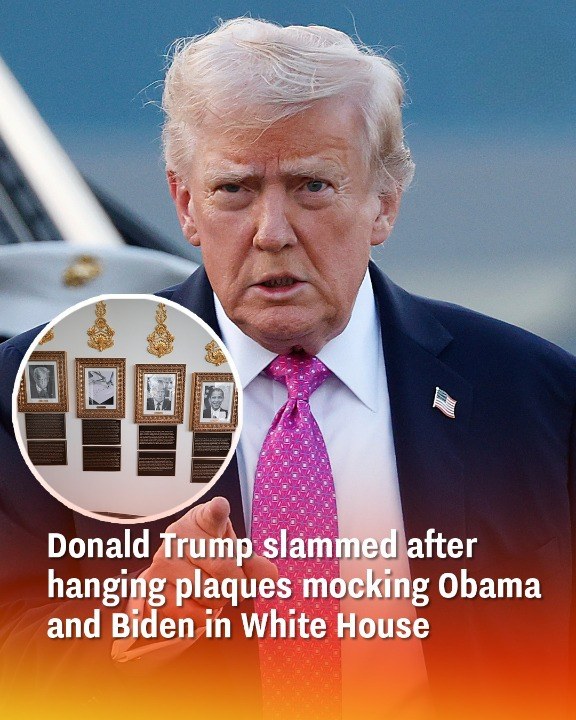
In contrast, plaques dedicated to Republican presidents have been described as notably complimentary. Figures such as Ronald Reagan are portrayed in glowing terms, with emphasis on communication skills, leadership, and electoral success. Even historically contentious presidencies are presented in a favorable light, focusing on achievements while omitting widely discussed controversies. This uneven treatment has reinforced claims that the exhibit reflects personal political branding rather than a neutral historical record.
The most detailed plaque is reserved for Donald Trump himself. It frames his presidency as a period of struggle against entrenched opposition and portrays his time in office as a transformative era for the country. Supporters describe the language as a bold defense of his record, while critics view it as self-promotional and inappropriate for an official government space.
Reaction to the plaques has been swift and divided. Political leaders, historians, and ethics experts have raised concerns that the White House, as a public institution, should not be used to elevate one narrative while discrediting others. Some argue that the display risks undermining the dignity of the presidency by blurring the line between governance and personal grievance. Others worry it could set a precedent in which future administrations feel compelled to revise history through a partisan lens.
Beyond immediate criticism, there is growing debate about the long-term implications for the institution itself. Traditionally, presidential portraits have symbolized continuity, reminding visitors that leadership changes but the republic endures. Introducing openly judgmental language into this setting raises fears of a cycle of retaliation, where each new administration alters the historical record to suit its own perspective.
Questions have also been raised about ethical boundaries and the use of public resources, though no definitive legal conclusions have been reached. For now, the debate centers less on technical rules and more on norms, expectations, and the role of restraint in democratic leadership.
Ultimately, the controversy surrounding the “Walk of Fame” plaques reflects a deeper national disagreement about history, power, and narrative control. Supporters see the plaques as a candid expression that challenges conventional political storytelling. Opponents view them as divisive and unnecessary, arguing that national symbols should unify rather than provoke. As the discussion continues, the plaques remain in place, serving as a visible reminder of how sharply divided interpretations of leadership and legacy have become.