
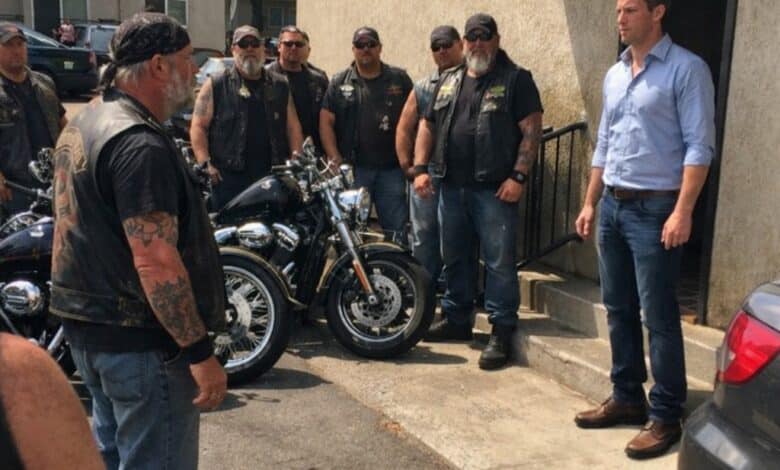
And they helped my child feel safe in her own home.
When the Perfect Husband Turns Into a Threat
My daughter, Megan, married Kyle when she was twenty-three. To the outside world, he looked like the total package: polite, educated, well-dressed, and always smiling at the right moments.
But behind closed doors, things shifted.
It started with shouting. Then it became grabbing. Then shoving. Then the kind of violence that’s planned—hits where bruises won’t show, apologies that sound convincing, promises that never last.
Megan hid it for two years.
When I finally learned the truth, I did everything you’re told to do in a domestic violence situation. We filed police reports. We documented incidents. We got a restraining order. I begged her to leave and helped her move into her own apartment.
She changed her number. She tried to disappear.
But Kyle didn’t stop.
Restraining Orders Didn’t Stop Him
Kyle violated that restraining order six times.
Six times we called. Six times reports were taken. Six times we were left with the same sick feeling: paperwork without protection.
He slashed her tires. He showed up at her job. He sat outside her apartment at night like he owned the place. Megan stopped sleeping. Stopped eating. Jumped at every sound in the hallway.
Then one day at work, I broke down in the break room. My coworker Linda—quiet, private, always covered in long sleeves—sat beside me and spoke softly.
“My ex was like that,” she said. “The police didn’t help me either.”
She wrote a number on a napkin and slid it across the table.
“His name is Hank. He runs a motorcycle club. They help women who are being stalked or threatened.”
I remember thinking, Absolutely not. I almost laughed from disbelief.
And yet…I kept that napkin.
I stared at it for three days.
The Night Everything Escalated
On the fourth day, Kyle broke into Megan’s apartment while she was sleeping.
She woke up and he was standing over her bed.
When the police arrived—forty minutes later—Kyle was gone. Another report. Another “we’ll note it.” Another night where my daughter was expected to somehow feel safe again.
That’s when I finally called the number.
“My name is Karen,” I said. “Linda gave me your contact. It’s about my daughter.”
I told Hank everything: the violations, the fear, the break-in, the helplessness. He listened without interrupting, then asked one simple question that made my stomach drop:
“Where is he parking when he watches her place?”
Then he said, calm as if he’d done this a hundred times:
“We’re going to make sure he understands your daughter isn’t alone anymore.”
Forty Motorcycles Outside Her Apartment
Two days later, I was at Megan’s apartment when I heard it—engines, lots of them, rolling in like thunder.
I looked out the window and felt my chest tighten.
Motorcycles filled the street. The parking lot. Both sides of the road. Leather vests. Tattoos. Beards. The exact image I’d spent years fearing.
And every single one of them was focused on Kyle’s truck.
He was parked across the street again, watching her building like he’d been doing all week.
Megan stood behind me, whispering, “Mom…what is happening?”
I stepped outside, heart racing.
The riders formed a wide circle around Kyle’s pickup. No yelling. No damage. No chaos. Just presence—quiet, controlled, and impossible to ignore.
A tall man with gray hair pulled back in a ponytail walked up to the driver’s window. He didn’t pound on the glass. He didn’t threaten. He simply stood close enough that Kyle couldn’t open the door without facing him.
Kyle lowered the window a couple inches.
Hank leaned in and spoke softly for less than a minute.
Then he stepped back.
Kyle’s hands shook on the steering wheel. He started the truck and peeled away so fast he nearly clipped a motorcycle. One rider tapped the tailgate as he passed—not hard, not violent, just a reminder: we’re here.
Kyle disappeared down the street.
No cheering. No celebration. Just silence.
Hank looked up at me and nodded once.
“He won’t be back tonight,” he said. “But we need to talk about what comes next.”
They Didn’t Hurt Anyone—They Removed the Fear Advantage
Hank came inside alone. He took off his sunglasses and sat at Megan’s kitchen table like a neighbor stopping by.
Up close, he didn’t look like a menace. He looked like someone’s grandfather—weathered face, steady hands, kind eyes.
“We’re not vigilantes,” he told me. “We don’t hurt people. We don’t need to.”
Then he explained something I’ll never forget:
“Men like Kyle run on fear. They isolate women because they believe nobody will show up. Restraining orders are paper. Police can’t be everywhere. But a visible, consistent presence? That changes the math.”
He told me their plan was simple and legal: rotating watch shifts, escorts when needed, staying visible, documenting behavior, and making sure Megan was never alone in the ways that mattered.
“If he comes back,” Hank said, “he’ll see us. Every time.”
Every Rider Had a Reason
That first night, two riders stayed in the parking lot until sunrise. They didn’t sleep. They drank coffee from a thermos and talked quietly, like men who understood what was at stake.
Over the next weeks, I met more of them—people I would have crossed the street to avoid before all this.
- Dutch, a retired firefighter who never stopped checking on the people he loved.
- Tiny, a giant of a man with the gentlest voice, who left homemade cookies at Megan’s door with a note: “From your brothers.”
- Maria, one of the few women in the club, who helped Megan find a support group and a path back to herself.
- Jake, quiet and watchful, who carried pain you could feel without him saying a word.
These weren’t “animals.” They were human beings who had seen what violence does—and decided they would not be passive bystanders anymore.
And for the first time in months, my daughter slept.
The Hard Truth: He Hurt Someone Else Before the System Acted
Six weeks after the club first showed up, Kyle was arrested.
Not for what he did to Megan.
He had moved on to stalking another woman—someone who didn’t have a support network, a safety plan, or people watching the parking lot.
He broke into her home and beat her so badly she landed in the ICU.
Only then did the system treat him like the threat he had always been.
When Hank told me, I sat in my car and screamed—not from relief, but from fury. Because it shouldn’t take a tragedy for danger to be taken seriously. It shouldn’t take “one more victim” for action to happen.
Hank’s voice stayed steady when he said, “She’s going to be okay. She’s got family now. We’re already on it.”
My Daughter Started Healing—and Then She Started Helping
Megan’s recovery wasn’t instant. Trauma doesn’t work that way.
But slowly, she ate again. Slept longer. Stopped checking the locks four times. The fear didn’t vanish overnight, but it stopped running her life.
Then one day she said something I didn’t expect:
“I want to volunteer with Hank’s group. I want to help other women.”
She began answering the crisis line—becoming the calm voice she once needed. The person who says, “Tell me everything,” and means it.
The daughter who was once afraid to open her own front door became part of the reason other women could open theirs.
I Was Wrong About Them—and I Won’t Stay Quiet About It
Months later, Hank invited me to a barbecue. I almost skipped it because old assumptions die hard.
But I went.
There were families, kids running around, dogs, food on folding tables, music playing—an ordinary summer gathering. The only difference was leather vests draped over lawn chairs and motorcycles parked in the grass.
Hank found me hesitating near my car and said something that stuck:
“The hardest part isn’t the late-night watches. It’s the way people judge us before they know us. The next woman who gets a number on a napkin shouldn’t be afraid to call.”
He was right.
Those three days I hesitated could have cost my daughter her life.
So here’s what I’ll spend the rest of my life saying plainly: sometimes the people who look the scariest are the ones who show up with the most heart—and the most discipline—when it matters.
Closing Thought
If you’ve ever judged someone by their appearance, their hobbies, or the way the world labels them, you’re not alone—I did too. But my daughter’s safety taught me to look deeper than stereotypes and louder than rumors.
If this story moved you, share your thoughts in the comments—and if you know someone who needs encouragement or support right now, send this to them. You never know who’s holding a “napkin number” and just needs the courage to make the call.