
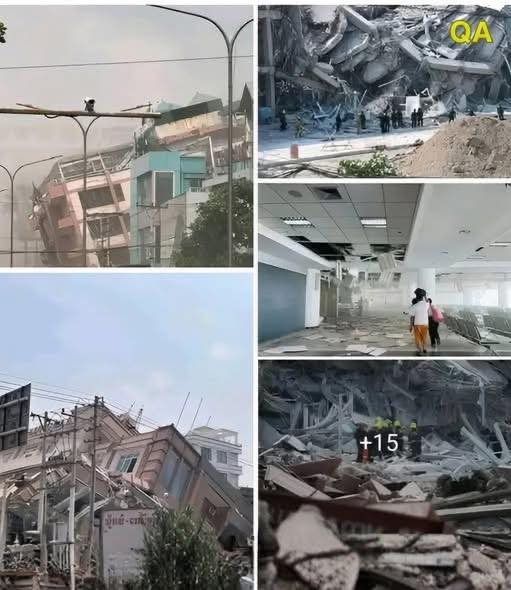
A strong aftershock adds to the fear
Roughly 10 minutes later, a second powerful quake—reported at magnitude 6.4—struck about 20 kilometers from Kyaukse. While categorized as an aftershock, its strength made it feel like a separate major event. For residents already shaken by the first earthquake, it intensified anxiety and uncertainty about what might come next.
No confirmed casualties in early updates, but officials urge caution
Despite the intensity of both quakes, early updates indicated no confirmed casualties or major infrastructure damage at the time of initial reporting. Still, authorities stressed that assessments were ongoing and that risks can remain even after the shaking stops.
Large earthquakes can weaken structures in ways that aren’t immediately visible. Additional concerns—such as aftershocks, landslides, falling debris, and compromised buildings—may emerge hours or days later. Emergency teams and monitoring agencies continued tracking developments and urging the public to stay alert.
Why earthquakes are a recurring risk in Southeast Asia
Seismologists note that parts of Southeast Asia sit in a geologically active zone where tectonic forces regularly interact. Smaller tremors have occurred in recent months in various areas, serving as quiet reminders of the region’s ongoing seismic potential. A 7.7 magnitude earthquake, however, falls into the category of a major earthquake—capable of serious damage depending on depth, location, building standards, and local ground conditions.
Experts also point out that earthquake depth can strongly influence surface impact. In some cases, deeper quakes may spread energy over a wider area while reducing the most destructive shaking at the surface—though they can still be felt across great distances.
Preparedness matters: simple steps that can save lives
Events like this renew urgent conversations about earthquake preparedness and building safety. Officials across the region continue reminding residents of basic but essential safety actions, such as:
- Drop, Cover, and Hold On during shaking
- Stay away from windows and heavy objects that can fall
- If outdoors, move to an open area away from buildings and power lines
- After shaking stops, be cautious of aftershocks and avoid damaged structures
Even when there’s no obvious destruction, the emotional impact can linger. Many people describe earthquakes as one of the most unsettling natural disasters because they arrive with little warning—and instantly change how “safe” everyday spaces feel.
What happens next
As officials continue inspections and scientists analyze the seismic data, residents across the region are being urged to stay informed through reliable local updates and follow guidance from emergency services. This earthquake may have passed quickly, but the need for awareness and readiness remains.
CTA: Have you or your family felt these tremors? Share what you experienced in the comments, and consider subscribing/bookmarking for timely updates, safety tips, and verified regional news as more information becomes available.